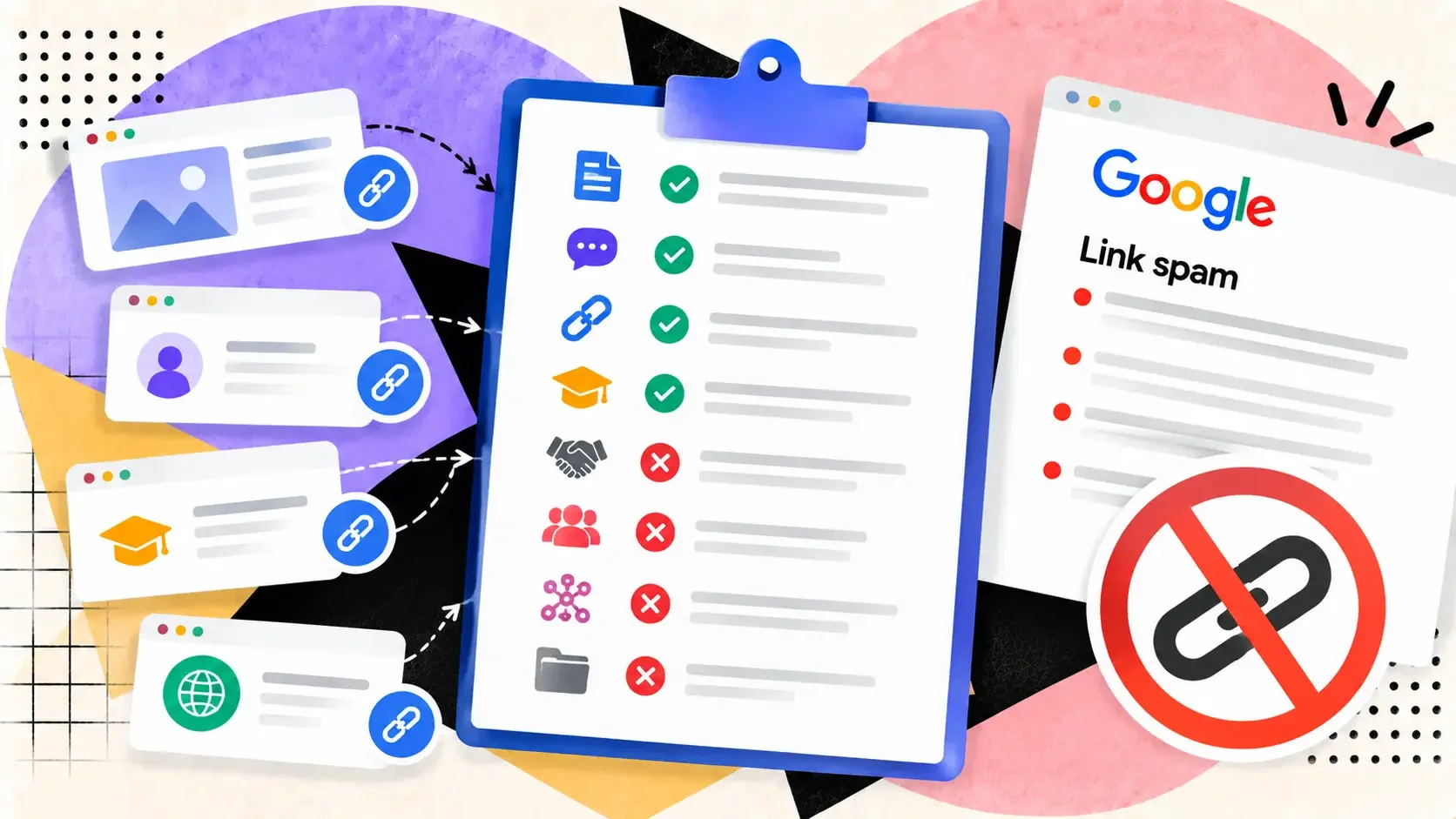
Google's link spam policy names directories, forum signatures, guest posts and link swaps. Here is where each free backlink method stands against it.
A viral r/SEO thread asked a question that sounds reasonable: Google "officially said" random, low-quality backlinks are useless, real links cost money, so how do you build them for free? Edward Sturm spent a 14-minute episode of his podcast reading his favorite replies. Some of the advice holds up. Some of it doesn't, and the premise itself is looser than it sounds.
We watched the whole video, read Google's own pages, and checked each claim. Here is what survived.
What Google's policy says about the premise
The thread's wording, as Sturm reads it, is that Google said low-quality unrelated links like random blog submissions, directory submissions and bookmark sites no longer provide value. Google's spam policies page, last updated August 28, 2026, says something narrower and sterner. Under link spam it lists "low-quality directory or bookmark site links," along with buying or selling links, excessive link exchanges, automated link creation, and a few other patterns. It does not use the word "useless," and it does not mention random blog submissions in that list. Spammy blog comments appear separately, under user-generated spam.
The policy also says sites that violate it may rank lower or not appear at all. That is a stronger statement than "ignored," and it is about purpose: links made primarily to manipulate rankings. Free does not exempt a link, and neither does low effort.
The free methods the policy names
Directories and bookmark sites. The qualifier carries the weight. The policy names low-quality ones, not directories as a category. Our look at which backlink directories are safe covers how to tell the difference, and a submission you could not defend to a human reviewer is the one to skip.
Forum and comment links. Google's example is a forum comment with a short thanks and a signature stuffed with keyword-rich links. A plain, relevant reply that mentions your site once is a different thing. Google also recommends that site owners mark user-generated links with rel="ugc", and says links marked that way will generally not be followed. So a clean comment may be allowed and still pass little. More on this in whether blog comment backlinks still work.
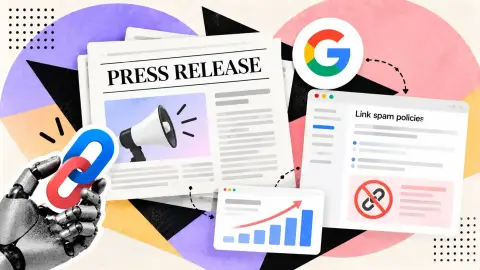
Guest posts and press releases. The policy points at articles, guest posts and press releases distributed on other sites that carry links with optimized anchor text. The risk sits in the anchor and the distribution, not in writing for someone else. See what gets accepted in guest posting and press release backlinks under the policy.
Link swaps. "Link to me and I'll link to you" is on the list, with the word "excessive" attached, along with partner pages built only for cross-linking. One mutual link between two sites that know each other is not a scheme. A page of fifty reciprocal links is.
Free products for links. This one surprises people. The policy lists sending someone a product in exchange for them writing about it and including a link. Google's rel documentation says compensated links should carry rel="sponsored", and that nofollow is still acceptable.
Automation. Using automated programs or services to create links is named outright. A tool that finds prospects is not the same as a program that places the links, but that distinction is our reading, not Google's wording.
What the video recommends, checked
Original research and public-data studies. The best advice in the thread is to publish something others need to cite: a hospital-revenue article that a newspaper ran, a state-by-state pest ranking built from census data that reportedly earned about a dozen links, a scraped dataset of businesses in a sector. The mechanism is sound, and none of the policy's examples describe it. The results are another matter. They are self-reported comments, which we could not trace to a source, and Sturm himself notes one appears to have been written with AI help. Treat them as ideas, not evidence. One useful detail from that comment: say what your numbers do not measure.
Directories. Sturm argues relevant business directories are not random, and says rankings for a new business he is funding improved immediately after listing it in a set of directories. That is one site and one anecdote, and he says the link to the directory list is his affiliate link. It fits the policy's wording, which targets low-quality directories, but it proves little about cause.
Expert quote platforms. The video says to sign up for HARO, and describes Connectively as previously called Featured. That last part is wrong. Cision's own notice says Connectively and HARO were discontinued on December 9, 2024, and Connectively was the name Cision gave HARO, not a former name of Featured. HARO has since come back under a different owner, which we explain in the post-HARO landscape. Our posts on podcast guesting and editorial links through digital PR cover the other free routes the video touches.
Backlinks as "up to a third" of ranking weight. This line comes from a Reddit commenter, and Sturm agrees with it. Google does not publish ranking weights, so there is nothing to check it against. It is an opinion presented as a number.
Paid links "tank" AI visibility. A commenter described one audit where about 20 paid backlinks coincided with AI visibility under 6% of queries. It is a single unnamed case, and the commenter did not separate the links from other possible causes. It is worth watching, not repeating as fact.
A five-question test for any free link
Did anyone pay, swap, or send a product for it? Is the anchor text something a person would write, or something you chose to rank for? Was it placed by a program? Could the site owner have declined it or qualified it? Would the page exist if search engines did not?
If the answer to the first three is no and the last two are yes, the link looks nothing like the examples on the policy page.
Check what you got
Once a link is live, confirm how it is marked. Links tagged ugc, sponsored or nofollow are generally not followed, and a directory or forum may apply them automatically. SerpCrest's bulk DoFollow checker tests up to 100 URLs for live, followed and indexed status at once. Our piece on nofollow links and AI search explains why a nofollow link is not worthless, only different.
The policy does not say free links are bad. It says links made mainly to manipulate rankings are bad, then lists a lot of familiar free tactics as examples. Pick methods where a real person chose to link to you, and treat any claim that arrives as a comment, a number or a case study as a lead to check.