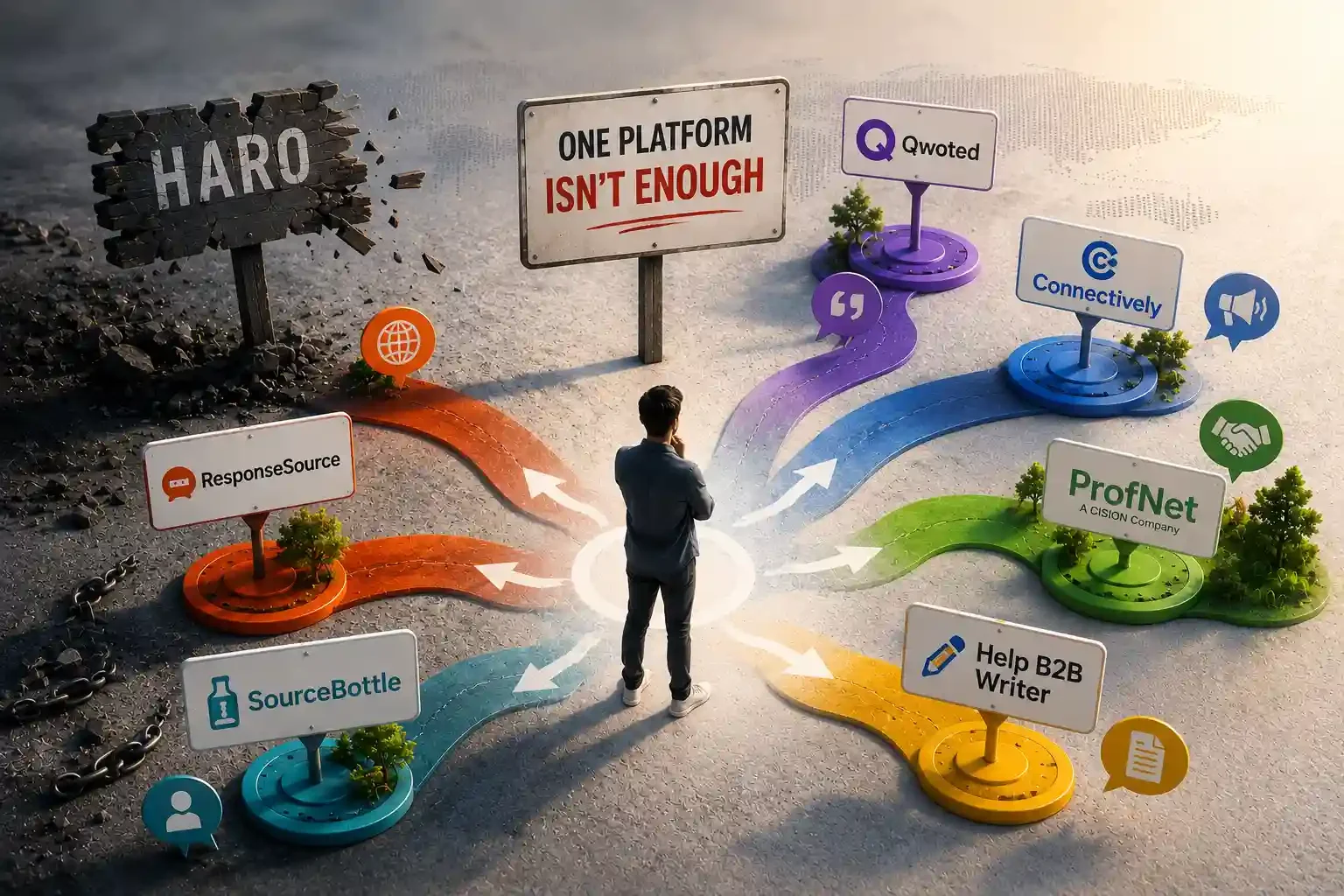
HARO is back, but the landscape changed. Discover the best HARO alternatives and find the right platform to connect with journalists. Explore your options now!
HARO's shutdown didn't create a gap that one platform rushed in to fill. It created a scattered landscape where the tool that actually works for you depends heavily on which journalists you're trying to reach, and most "HARO alternatives" roundups still write about it like there's a single winner to sign up for.
What happened to HARO
Help a Reporter Out launched in 2008, got picked up by Vocus and later Cision, and was rebranded Connectively. Cision shut it down on December 9, 2024, citing a shift in focus toward its CisionOne platform, which doesn't include the journalist-requests feature that made HARO useful in the first place. That looked like the end of it.
Then Featured.com, a separate PR platform, acquired HARO from Cision and announced the deal on April 16, 2025. HARO came back as a free service, supported by newsletter ads rather than a subscription, delivering journalist queries by email again. Featured's founder Brett Farmiloe framed the revival around a specific pressure point: "As AI floods the internet with generic content, journalists need credible, human sources more than ever." Whatever HARO is now, it's a different company running it, and it's competing with several platforms that grew directly out of its six-month absence rather than folding once it came back.
The platforms that filled the gap, and who they serve
Qwoted built a database of over 130,000 vetted experts and a media list of 250,000+ reporters. It's not evenly distributed globally. Qwoted's own team told BuzzStream directly: "we are still heavy with US publications which equates to about 80% of our total volume. 15% of our monthly requests are specific to the UK and then there is a 5% spread across CA and other countries." If most of your target coverage is US-based, that's a meaningful head start. If you're chasing UK trade press specifically, Qwoted is not where most of that volume lives.
Source of Sources exists because Peter Shankman, the person who created HARO in 2008, built a replacement after watching Connectively collapse. Its user base skews similarly US-heavy, around 82% by BuzzStream's numbers, but the thing that distinguishes it isn't geography, it's Shankman's approach to spam. Asked how he keeps the platform usable, he described a one-strike policy: "if the reporter emails me and says, 'Hey, this guy was pitching off-topic,' they don't get a second chance... life is too short to give second chances to everyone." That's a much harsher filter than most platforms run, which changes the math on how you pitch it: a sloppy, off-topic response isn't just wasted effort, it can end your access entirely.
#JournoRequest, the hashtag on X, isn't really a global tool at all. A BuzzStream data study scraping 4,000 tagged tweets found it's the single most-used media-request hashtag, averaging 76 requests a day, more than double the next hashtag, #PRRequest, at 27.8 a day. But 78.5% of that volume comes from UK-based accounts versus 11.6% from the US. The hashtag itself was started in 2008 by Scottish journalist Sarah Ewing, which explains the geographic lean, and the study's own interviews with US journalists on Reddit found most of them had simply never heard of it. Treating #JournoRequest as a default channel only makes sense if UK coverage is actually part of your target list.
The channel none of the "alternatives" lists mention
The same BuzzStream research surfaced something that doesn't fit neatly into a platform comparison: freelance journalist Joni Sweet told them that in the rare cases she needs to find a source through social media, she'll use #JournoRequest, but the main place she shares editorial queries with PR pros is her own Substack, which she said gets her what she needs about 95% of the time. That's not a platform PR people can search or filter, it's a direct relationship with one writer's newsletter. As more journalists, including some who've left staff jobs at major outlets specifically to write on Substack, build direct-to-reader channels, some of the highest-value source requests are moving somewhere none of the aggregator platforms index at all. The only way in is following the individual writers who cover your space and building a real relationship before you need anything from them, which is slower than any platform subscription but immune to whatever happens to the next HARO successor.
What a real stack looks like
The mistake isn't picking the wrong platform, it's assuming there's a single right one to standardize on. A realistic setup looks more like: Qwoted or the revived HARO for US-heavy general coverage, since that's where their volume actually concentrates. Source of Sources for a smaller, higher-trust pool if your pitches are genuinely on-target and you can afford to lose access on a bad pitch. #JournoRequest specifically when UK trade or consumer press is part of the target list, not as a default habit. And a direct-outreach lane, following individual journalists and their newsletters, for the coverage that increasingly never touches a platform at all. None of these replace each other. The old HARO habit was one inbox, one process. The current landscape doesn't offer that shortcut back.