How digital PR earns editorial links: what journalists want from a pitch, how to build a data story, how to pitch it, and how to check the links you get.
Digital PR earns links by giving journalists something worth citing: a story with new information, such as data you gathered yourself. When a writer uses it, they link to you as the source. Those links are editorial, which keeps them clear of the paid-link patterns in Google's spam policies. The catch is that 54% of journalists in one large survey say they seldom or never respond to PR pitches. Here is what journalists say they want, how to build a campaign around it, and how to check the links you earn.
Why pitches fail, in journalists' own words
Muck Rack's State of Journalism 2025 surveyed journalists in April 2025 and analyzed 1,515 responses. Its findings include:
- 84% of journalists say at least some of their stories start from PR pitches, though 49% put that share at between 1% and 10%.
- On a normal day, 55% receive more than five pitches, and 54% say they seldom or never respond to them.
- 86% disregard pitches that are not relevant to their beat. Other reasons to delete a pitch: it is overly promotional (71%), it looks like a mass email (50%) or it is sent repeatedly without a response (44%).
The same survey asked what makes a pitch worth their time. 69% said a pitch that is clearly tailored to their beat, 44% said access to a credible source, and 41% said new or exclusive information.
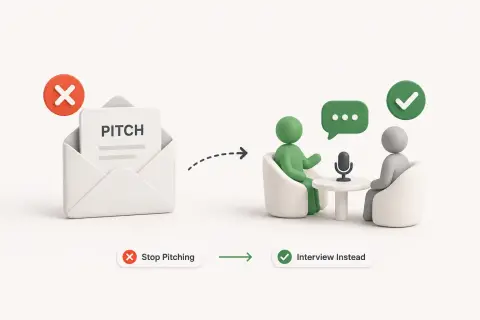
Our view, from these numbers and in the steps below: fit the pitch to the person you send it to, keep it from reading like an ad, and bring something new where you can.
Build the story first
Original data is one way to give a journalist something new. A few ways to get it:
- Your own product data. If your product collects data, anonymised trends from it can show something nobody else can see. Check your privacy terms before you publish any of it.
- Public data, cleaned up. Government and industry datasets can be hard to use. Sorting them into a clear, current picture can be a story in its own right.
- A survey. Ask people in your field a few sharp questions. State the sample size, dates and how you found respondents, because a journalist will need to judge the method before quoting it.
Then find the one finding that would make a headline, and build the campaign around it.
Publish a page journalists can cite
The link you earn points to the page that holds the findings, so make that page easy to use:
- Put the key findings at the top, in plain sentences.
- Keep charts simple and label them.
- Explain the method in a short section: who, how many, when.
- Keep sales copy off the page. Muck Rack's survey found 71% of journalists disregard pitches that are overly promotional, and we would hold the page to the same standard.
Pitch the right people, briefly
The survey points to a short, targeted pitch:
- Find writers who already cover the topic. Read their recent work before you write to them. A pitch tailored to the beat was the top signal journalists named.
- Keep it short. Muck Rack's follow-up Q&A on the survey reports that 69% prefer pitches under 200 words, a figure the report draws from four years of journalist surveys. The journalists on that panel added that content matters more than length.
- Lead with the finding. Put the headline number or fact in the first lines, say why their readers would care now, and offer the full data, the method or an interview.
- Follow up once, maybe twice. The same Q&A, again drawing on four years of surveys, reports that 50% of journalists say one follow-up is ideal and 51% say it should come within three to seven days. One journalist on the panel tells people to follow up "with at least one or two emails".
- Send one at a time. Half of journalists said a pitch that looks like a mass email gets deleted, and the report's perfect pitch box says 62% prefer to be pitched by 1:1 email.
For help using AI tools in this kind of outreach without it turning into spam, see our guide to AI email outreach for backlinks.
Stay on the right side of Google's policies
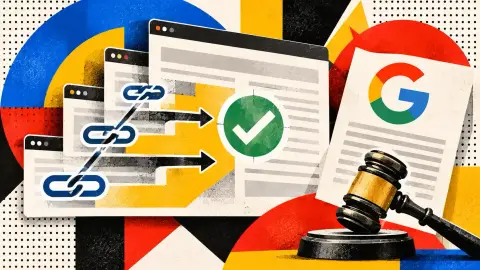
Earned coverage is fine. Paying for it is where the risk starts. Google's spam policies list "Advertorials or native advertising where payment is received for articles that include links that pass ranking credit" as link spam, along with "Exchanging money for links, or posts that contain links". If a publication asks for a fee to cover your study, treat it as advertising and expect the link to be marked sponsored. Our post on whether press release backlinks still help SEO covers the same rule for distributed releases.
Check the links you earn
Coverage can change after it goes live. An article gets edited, or a link is removed or marked nofollow. Two SerpCrest tools help here:
- The Bulk DoFollow / NoFollow Checker checks a list of URLs at once for whether each backlink is live, dofollow and indexed. Run it on new coverage as it comes in.
- The Backlink Manager, with an account, keeps each placement in a project, checks whether the link is still there and whether it is followed, and rechecks project links every week. You are notified when a link is confirmed lost.
For how digital PR fits with other link work, our comparison of link earning and link building sets out what each involves.
The short version
Find something new, publish it on a clear page, pitch it to the few writers who cover the topic in under 200 words, follow up once or twice, and check every link you get. Skip any placement you have to pay for unless it is marked as paid.