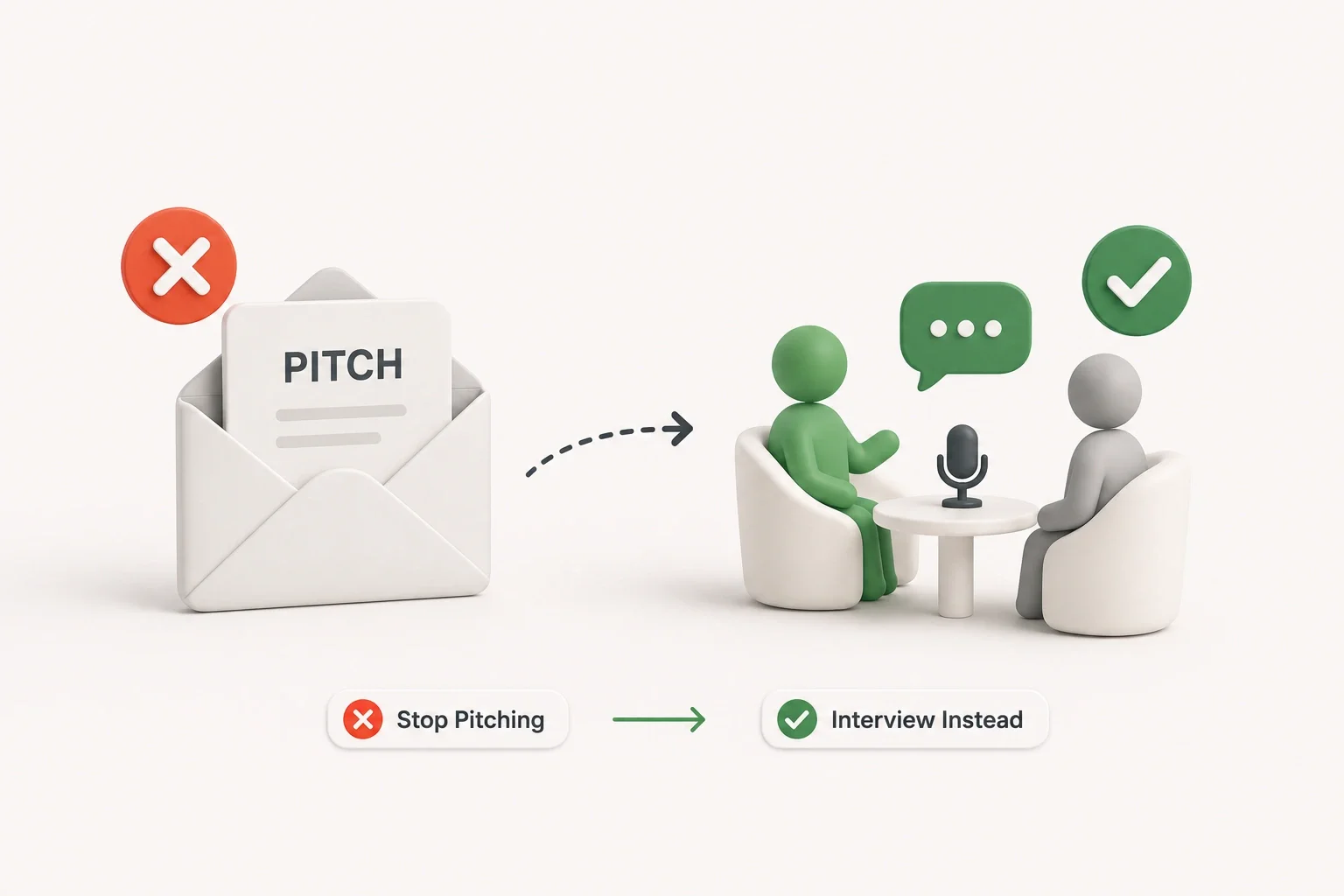
Cold link-building emails convert at roughly 8.5%. A newer tactic flips the ask: interview small bloggers on your own podcast, then let the link follow.
Cold link-building emails convert into an actual placement about 8.5% of the time, per a uSERP survey cited in Adam Connell's link-building statistics roundup. That's the number behind every ignored pitch sitting in a blogger's inbox right now. SEO creator Edward Sturm laid out a different approach in a recent episode of his daily podcast, The Edward Show: instead of asking a blogger for a link, invite them onto your podcast as a guest. Never ask for anything during the interview. Let the backlink show up months later, once you've built a relationship.
The method, in order
Sturm lays out a specific sequence: find small blogs and businesses in your niche or an adjacent one, prioritize people who actively run a website (not just a social account), invite them onto your podcast, and give them a genuinely good interview without asking for anything in return. Afterward, connect with them on social media and stay visible by continuing to publish. After a few weeks or a month of that low-pressure contact, you approach them about an article, a partnership mention, or some other coverage, by which point you're a known quantity instead of a stranger in their inbox. As your own show builds credibility, Sturm says you work up to bigger, more authoritative guests the same way.
The reasoning is straightforward: small bloggers and business owners are far easier to book than an established journalist or big-name creator, and many of them have never been interviewed before, which makes the ask itself a favor rather than a burden.
Why this isn't the same as podcast guesting
This blog has already covered podcast guesting as a link-building channel, but that's the mirror image of this tactic. Guesting means you're the one being interviewed, borrowing someone else's audience and (ideally) getting a link in their show notes. Sturm's method puts you in the host chair instead: you build the platform, you extend the invitation, and the relationship starts with you giving a stranger attention and an audience rather than asking them for one. You don't need an existing show with real listenership for this to work, either. The value to the guest in the early going is the interview experience and the relationship itself, not your download numbers.
The part that makes it work is also the part that's easy to get wrong
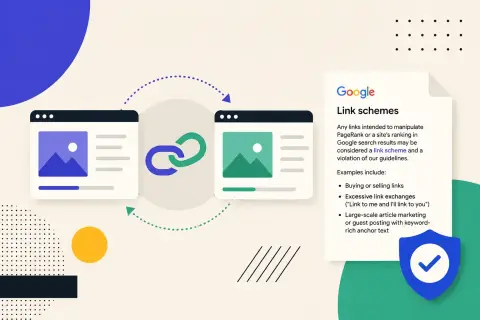
Sturm is explicit about one failure mode: don't ask for the backlink during the interview, and don't build an obvious pattern of "I'll link to you if you link to me." He calls this out directly as something to avoid, not as a footnote. That instinct lines up with what Google's own spam policies say about reciprocal links: the problem was never a single exchange between two sites that plausibly know each other, it's a scaled, obviously coordinated pattern. A podcast interview followed months later by an organic mention doesn't read as coordinated, because it isn't. It's a real relationship that happened to produce a link as a side effect.
What this buys you beyond one link
Podcast-driven relationships have a longer tail than a single placement. A guest may mention you unprompted on their own site later, introduce you to other people in the niche, or agree to a second interview once your show has grown. That's closer to the "borrowing trust instead of pitching" pattern already covered on this blog, except here you're building the audience relationship yourself instead of renting someone else's for one guest appearance. Sturm frames the whole approach as building a network of bloggers, business owners, and eventually journalists in the space, not collecting one-off links.
Where this fits, realistically
This is not a fast tactic, and it's worth saying so plainly: the entire premise is that the payoff (an article mention, a partnership listing, an unprompted plug) comes weeks or months after the interview, once a real relationship exists. It also assumes you're willing to run an actual recurring podcast, which is its own production commitment, not a one-off task you delegate to a link-building vendor. If you want a directory or backlink program that produces links this week, this isn't that. What it produces instead is a small, durable network of people in your niche who already trust you before you ever ask them for anything, which tends to survive algorithm changes and platform shakeups a lot better than a purchased placement does.