Google confirmed three times in 2026 that its spam updates don't target site reputation abuse. Here's what's enforcing it, and what that means for sponsored content.
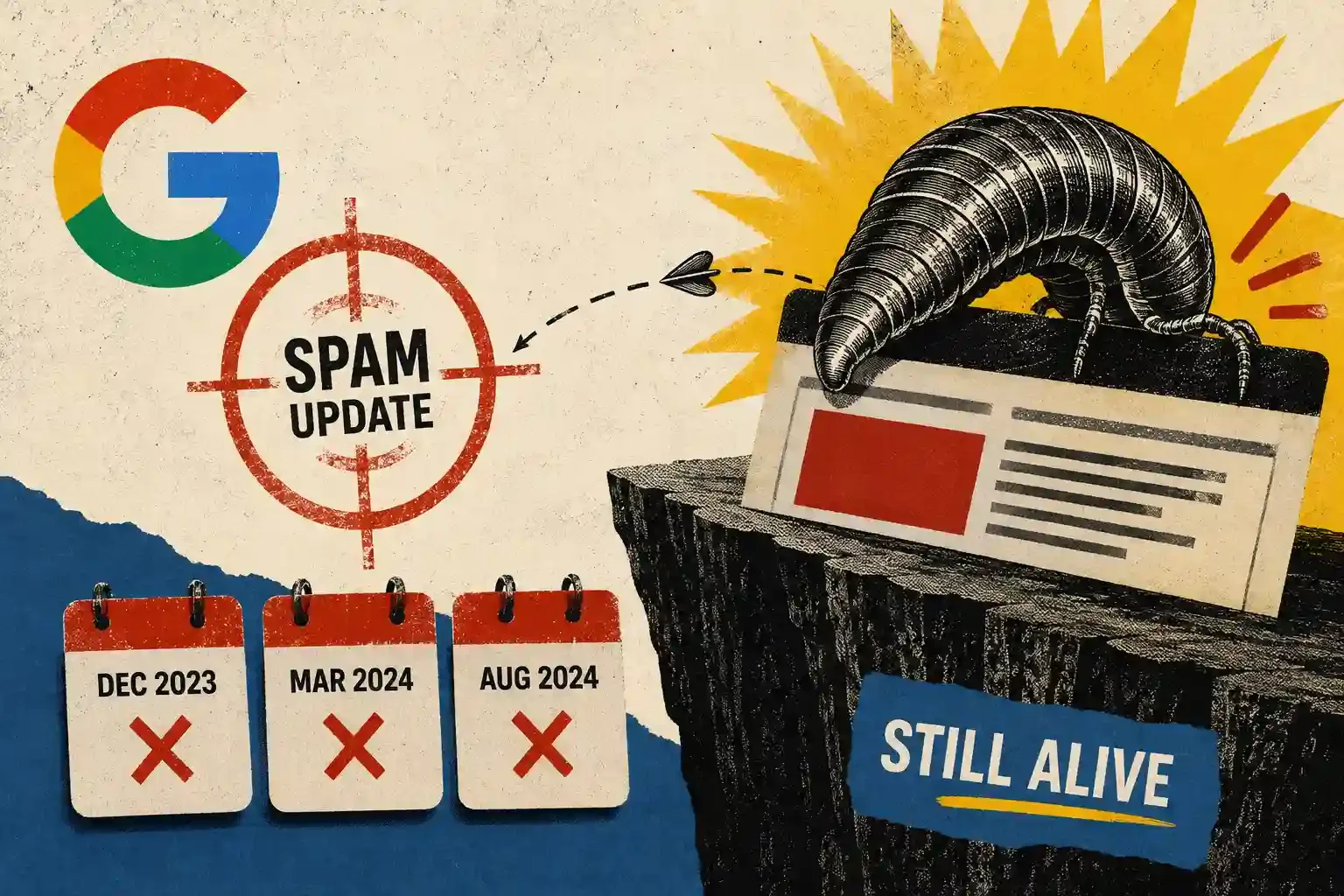
Google shipped a spam update on August 18. By August 21, it was done rolling out, and Google told Search Engine Watch directly that this one "does not target link spam, the site reputation abuse policy, or several other specific spam policies." That's the fourth time in three years Google has said this almost word for word about a spam update, and the third time this year alone. Yet the "spam update finally kills parasite SEO" post gets written anyway, every single time, because the update lands the same month rankings for some rented subfolder happen to move.
If you're tracking this because you run guest posts, sponsored placements, or a listings program that depends on knowing what gets a site penalized, the update dates are the wrong thing to watch. The real mechanism has been sitting in plain sight since 2024, and it isn't a spam update at all.
What Google confirmed, three times in 2026
Here's the pattern, and it's remarkably consistent. When Barry Schwartz at Search Engine Roundtable pressed Google on what the March 2026 spam update targeted, the answer was: "This update does not target link spam, it does not target the site reputation abuse policy and some other policies." That update finished in 19.5 hours, the fastest confirmed rollout on record.
Three months later, the same question got the same answer about the June 2026 update: "Does Not Target: This update does not target link spam, it does not target the site reputation abuse policy and some other policies." Identical wording. Then in August, Google repeated the disclaimer a third time, this time to Search Engine Watch, confirming again that the policy responsible for demoting parasite SEO sections wasn't part of the rollout.
None of the three updates announced a new spam category. None came with a companion blog post. Search Engine Journal noted that Google's own spam-updates documentation page hadn't changed since December. Whatever these three rollouts were tuning, it wasn't the rule that's been quietly gutting rented-authority content since 2024.
The policy that's doing the work has nothing to do with any of this
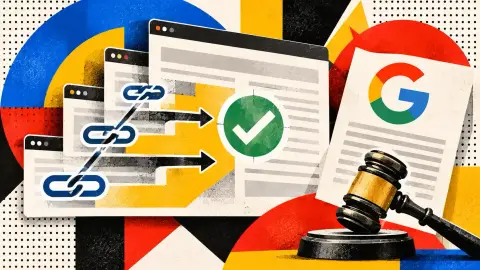
Site reputation abuse, the formal name for parasite SEO, is a different animal entirely. Google introduced it in March 2024 alongside two other new spam categories, gave publishers a two-month grace period, and started issuing manual actions in May 2024. It has stayed manual-action-only since launch: a human reviewer has to flag a section, not an automated system.
The policy got sharper eight months later. In November 2024, Google closed the loophole publishers were using to defend rented subfolders, i.e. claiming an editor had reviewed the content. Chris Nelson of Google's Search Quality team said the practice violates the policy "regardless of whether there is first-party involvement or oversight of the content." That single sentence is why "but our editors approved it" stopped being a usable defense.
Forbes Advisor is the case study everyone in this space already knows, and the timeline lines up with the policy, not with any spam update. SEO analyst Glenn Gabe flagged a major visibility drop starting September 25, 2024, affecting Forbes Advisor's health, credit card, banking, and car insurance sections, right after a September 18 exposé on Forbes Marketplace's SEO operation. A second, larger wave hit after the November 19 loophole closure. Neither drop coincided with a spam update. Both coincided with site reputation abuse enforcement.
Why the confusion keeps happening
Part of it is just timing. Google runs spam updates and refreshes its manual-action reviews on overlapping but unrelated schedules, so a site catching a site reputation abuse penalty in the same window as an unrelated spam update looks, from the outside, like one event. Part of it is that "spam update" is the only Google-branded term most site owners have learned to watch for, so any ranking movement gets filed under whichever update happened most recently.
That's a costly mix-up if you're diagnosing your own traffic. A drop tied to an actual spam update usually softens over a few refresh cycles once you clean up whatever tripped it. A drop tied to a site reputation abuse manual action doesn't move until someone files a reconsideration request in Search Console, and Google has been explicit that recovery can take months even then.
The fight over what "editorial control" even means is still open
Here's the part most coverage of this topic skips entirely: the policy itself is currently under formal legal challenge. On November 13, 2025, the European Commission opened Digital Markets Act proceedings against the site reputation abuse policy, after publishers argued it unfairly wipes out a legitimate way to monetize a site through commercial partners. Google's response, from Search Chief Scientist Pandu Nayak, called the investigation "misguided" and pointed to a German court that had already dismissed a similar claim as "valid, reasonable, and applied consistently."
The dispute hasn't settled. Google submitted a remedies offer to Brussels on May 6, 2026; two days later, Commission spokesperson Thomas Regnier said the offer was "simply not strong enough," and a group of publishers asked the Commission to reject it outright. The proceedings are still open, and the exposure for Google is real: up to 10% of Alphabet's global annual turnover if the Commission rules against it.
That matters beyond the headline. The entire question of what counts as acceptable "first-party involvement" in third-party content, the line this whole policy runs on, is being actively litigated by regulators, not just interpreted by Google's own reviewers. If the EU forces a change, the definition of what makes a guest post or sponsored section legitimate could shift under publishers without warning.
What this means if you're the one buying or hosting the placement
For anyone running actual link building or sponsored content, the line that matters is editorial judgment: did the host genuinely review what got published before it ran. That's the exact standard Google's November 2024 clarification hardened, and disclosure labels or nofollow tags don't move it either way. A guest post that a real editor reviewed, that fits the host's normal coverage, and that the host would plausibly have run without payment changing hands sits on one side of that line. A subfolder rented wholesale to run affiliate content the host never touched sits on the other, and no amount of "sponsored" labeling moves it back.
This blog has already covered what makes a modern guest post pitch get accepted, and the editorial-scrutiny trend there is the same force at work here from the other direction: hosts are tightening review not just because Google's spam updates are getting sharper, but because the one policy that can wipe out an entire section of their site with a single manual action hasn't relaxed since 2024, whatever the monthly spam update headlines suggest.
If you're vetting a placement (or a directory listing) for whether it'll hold up, ask the question Google's own reviewers are asking: would this content exist here if the host wasn't getting paid for the ranking signal underneath it. If the honest answer is no, no spam update needs to touch your niche for that placement to disappear. It was already exposed the day it went live.