Where AI helps link outreach and where it hurts: reply-rate data, Gmail's sender rules, Google's link spam policy and a five-step workflow you can run.
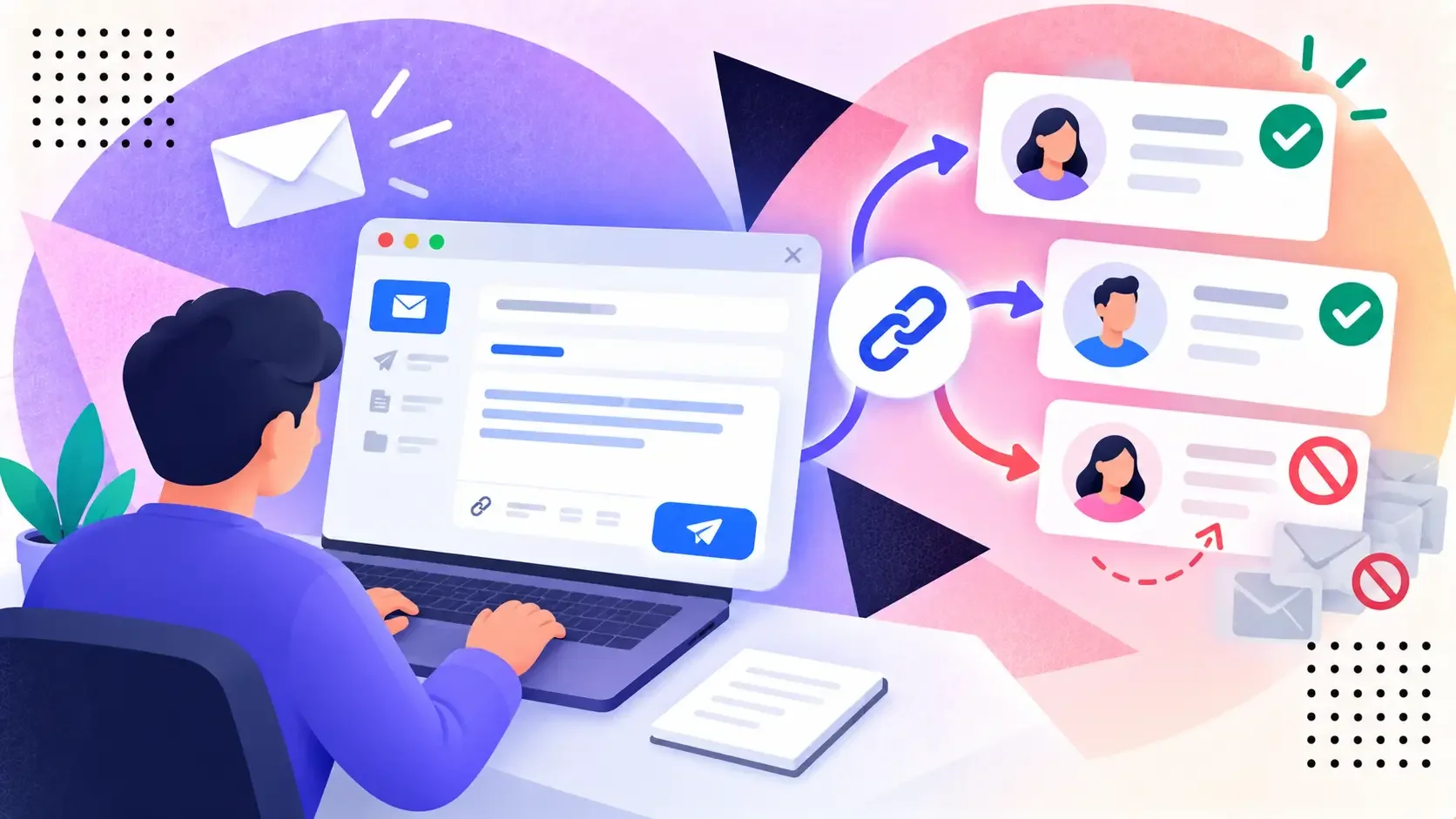
Use AI for the research and the first draft, and keep three jobs for a person: choosing who to email, writing the line about their page, and deciding when to hit send. That split is built to protect your reply rate, your sender reputation and your standing with Google's link rules. Here is where the line sits, the data behind it, and a workflow you can run on your next 20 prospects.
Where AI outreach goes wrong
Two habits show up in the weaker automated campaigns: fake personalization and too much volume.
BuzzStream analyzed 12,000 outreach campaigns and coded over 30,000 individual emails. Emails sent from a template with merge fields and nothing else got a baseline reply rate of 16%. What BuzzStream calls fake personalization, a line like "Hey FNAME, I just saw your article at XYZ.com. Great post!", did worse than no personalization at all, with a 1.3% drop in reply rate. Contextual personalization, which ties something specific about the person's work to the ask, lifted reply rates by 10.7% on average.
Feed a model nothing but a name and a URL, with no page text to read, and that generic line is about all it has to work with. The model is not the problem. The input is.
Volume tracks with lower replies too. OutreachLark's study of over 31 million emails found reply rates fell from 1.15% for campaigns of 1 to 50 emails to 0.37% for the largest campaigns, which OutreachLark puts at 1001 to 5000 emails. Its data comes from agencies that use OutreachLark mainly for digital PR pitches to journalists, and the author says plainly: "Most importantly, this is all correlative." Both studies point the same way. BuzzStream found its top accounts stood out for "the amount of time spent prospecting for highly relevant contacts", and OutreachLark says the real difference at top agencies "is the targeting."
The inbox rules your outreach has to pass
Recipients can report outreach as spam, and Gmail counts those reports against your domain. Google's email sender guidelines require every sender to Gmail accounts to "Set up SPF or DKIM email authentication for your sending domains" and to "Keep spam rates reported in Postmaster Tools below 0.3%." Senders of more than 5,000 messages a day also need DMARC, and their marketing messages must support one-click unsubscribe.
Two more lines on that page apply directly to outreach tools:
- Google says not to "send messages with subject lines starting with Re: or Fwd: unless the messages are actual replies or forwards". If your sequence tool adds Re: to a first email or a new thread, turn that off.
- "If messages from your domain are frequently reported as spam, future messages from you are more likely to be marked as spam." If your outreach goes out from the same domain as your client email, a bad campaign can hurt both.
The link rules your outreach has to pass
Google's spam policies list the kinds of link deals that count as link spam. They include "Exchanging goods or services for links", "Sending someone a product in exchange for them writing about it and including a link" and "Using automated programs or services to create links to your site". Paying is allowed only when the link is "qualified with a rel="nofollow" or rel="sponsored" attribute value".
Anchor text matters as well. The same policy names "links with optimized anchor text in articles, guest posts, or press releases distributed on other sites". If your AI-written guest post pitch asks for a keyword anchor, cut it.
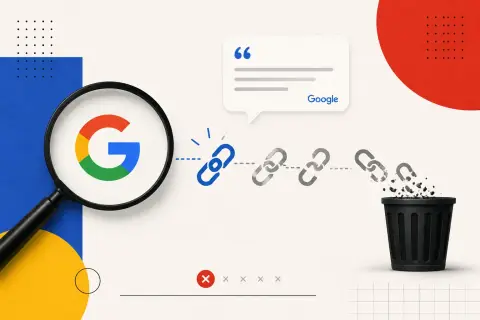
Google also has a system aimed at sites that sell links. Announcing the December 2022 link spam update, Google said SpamBrain "can now detect both sites buying links, and sites used for the purpose of passing outgoing links" and that "any credit passed by these unnatural links are lost." A site that answers your automated pitch with a price list is the kind of site that sentence describes.
A workflow that splits the work
- Build the list, then cut it by hand. Let a tool gather candidates. SerpCrest's Link Prospect Finder finds blogs that accept guest posts, resource pages and best-of lists in a niche, merged by site and scored by authority. Its Unlinked Mention Finder finds pages that name your brand without linking to it, with the exact sentence and a contact page. A mention makes an easy pitch to write, because the reason for it is real. Then open each site yourself and drop the ones that sell links or have nothing to do with your page.
- Have the model read, not guess. Paste in the text of the page you are pitching and ask three questions: what does this page cover, what is missing that your resource adds, and is this a fit at all? Check the answer against the page. If the model cannot point to a sentence, the fit is not there.
- Let it draft, and write the first line yourself. The model can turn your notes into a short email. The opening line, the one about their page, comes from you. Make that line tie their page to your ask, which is the contextual personalization BuzzStream measured.
- Send in batches you can read. Keep each batch small enough that you read every reply yourself. A model can sort replies into yes, no, not now and price lists. A person answers them.
- Record what you got. Log the link, the page and the anchor the moment it goes live, so you can check later that it is still there.
Run this check before every send
A short list we use before an email goes out:
- The first line names something on their page that the title alone would not tell you.
- The ask fits the page. A resource page gets a resource, not a guest post pitch.
- No fake Re: or Fwd: in the subject.
- No offer of money, a product or a link swap in return for a followed link.
- Any anchor you suggest is your brand or the page title, not a keyword.
- You would be fine if the editor posted the email publicly.
How to tell if it is working
Track replies per batch, not opens. BuzzStream's median account got a reply rate of about 12%, the top 5% got over 40%, and the bottom 25% got under 7%. Those figures come from BuzzStream's own customers, in a study first published in 2018 and last updated in August 2024, so treat them as a rough yardstick, not a target. If your batches sit in that bottom range, fix the list before you rewrite the email.
Start with your next 20 prospects. Run them through the five steps, then compare the replies with your last automated batch. For the wording itself, our breakdown of what gets outreach emails replies goes line by line, and our look at how many follow-ups are worth sending covers the sequence. If you have nothing worth pitching yet, start with link earning instead.