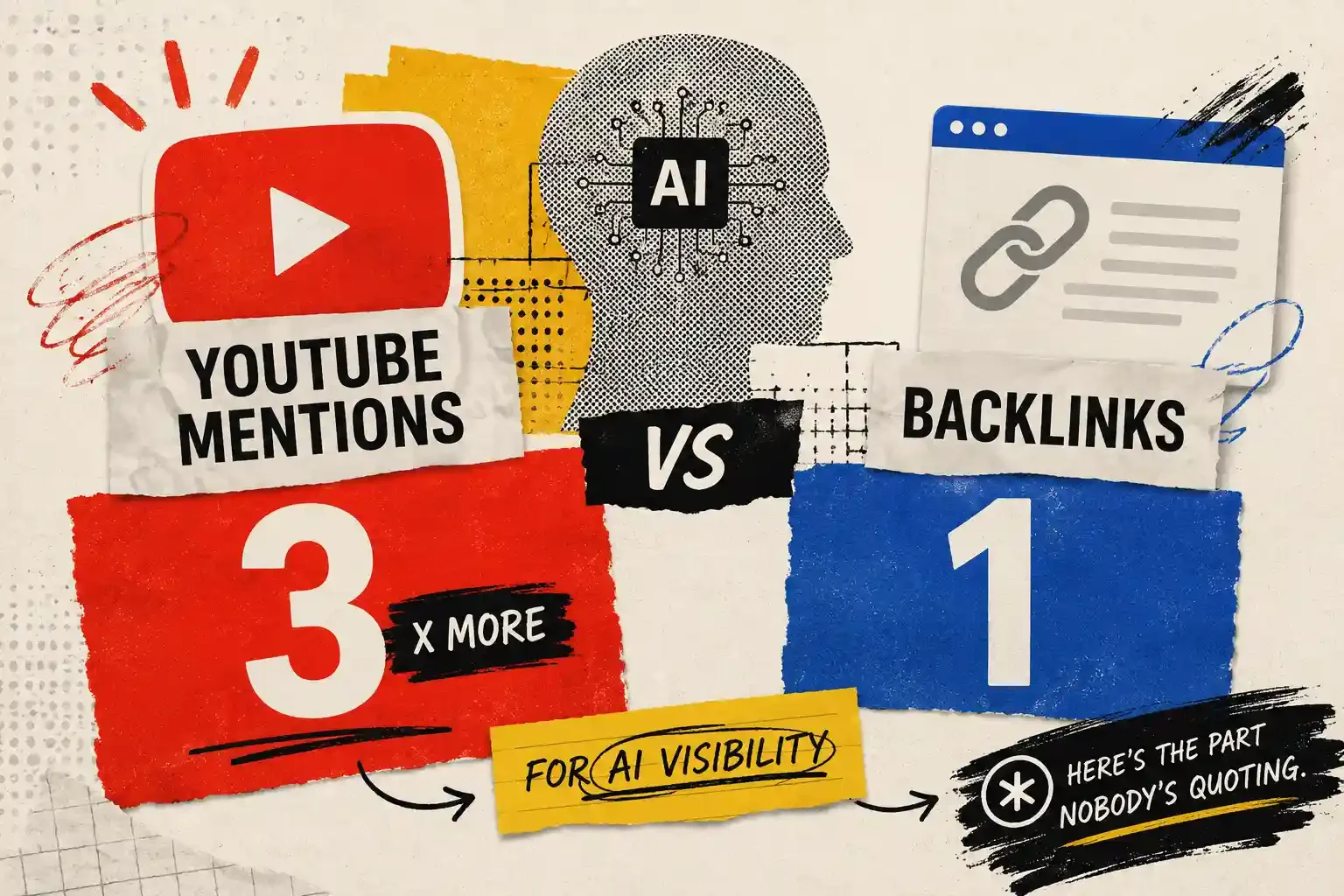
Ahrefs' 75,000-brand study found YouTube mentions beat backlinks 3-to-1 for AI visibility. Here's what the correlation doesn't prove.
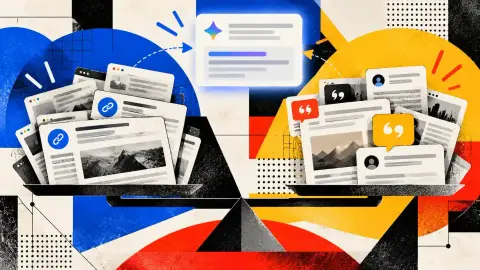
Ahrefs studied 75,000 brands and found that how often a brand gets mentioned in a YouTube video title, transcript, or description correlates with AI-generated search visibility at roughly 0.737 on the Spearman scale. Backlinks came in at 0.218. The Next Web covered the full breakdown when Ahrefs published the Q1 2026 AI Search Benchmark Report on May 26. That gap is real. It's also being used to argue something Ahrefs' own methodology doesn't support.
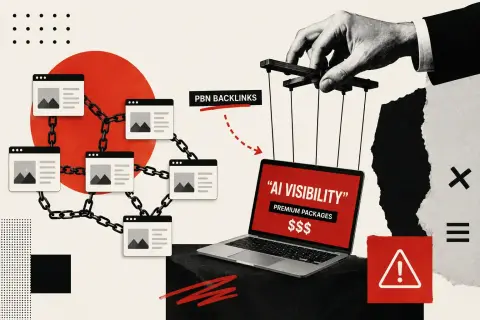
One AI-visibility agency, AuthorityTech, published a piece built on an earlier version of this same correlation data, arguing brands should move budget out of link building and into earned media. Its framing: "Earned editorial authority accrues. Backlink campaigns expire." That's a strategic recommendation dressed up as a finding. The study measured a correlation. It never measured what happens when you spend less on one thing and more on the other, and the researchers who ran it said so directly.
What the study tested
Ahrefs pulled data through its Brand Radar tool, filtered for domains with a domain rating above 40 and at least one keyword pulling 800 or more monthly searches, then ran a Spearman correlation between different signals and how often each brand turned up in ChatGPT, Google AI Mode, and AI Overviews. YouTube mentions scored highest at 0.737. Branded web mentions, the metric that topped an earlier version of the same research, sat between 0.66 and 0.71. Backlinks scored 0.218. Page count, a rough stand-in for content volume, barely registered at 0.194.
Buried in that same coverage is a line that changes how every one of those numbers should be read: the study's own authors "note that correlation does not equal causation." That's not a caveat tacked on by a skeptical reporter. It's Ahrefs saying it about its own data.
Why the gap doesn't mean what the pitch decks say it means
A Spearman correlation tells you two things move together. It doesn't tell you which one, if either, is doing the moving. The brands in this sample already cleared a domain rating of 40 and a real search-volume keyword, which means the population is skewed toward companies people already talk about. A brand that gets discussed across twenty YouTube videos is also, separately, the kind of brand journalists cover, customers search for by name, and AI systems have simply seen mentioned more often across more of the training and retrieval data both Google and OpenAI draw from. The New York Times has reported that GPT-4 trained on more than a million hours of YouTube transcripts, and Google's AI Mode cites YouTube more than any other single domain. A brand doesn't need to cause AI visibility by being mentioned on YouTube. It can simply be the kind of brand that shows up everywhere, including YouTube, for the same underlying reason: it's already big.
That's the confound AuthorityTech's piece skips past entirely. Nike, Apple, and Amazon dominate all three AI platforms in this same dataset, with an output-overlap correlation of 0.779 between them. Fame predicts fame. A correlation coefficient measured across already-famous brands doesn't tell a mid-size company that switching its link-building budget to creator partnerships will produce the same result, and Ahrefs never claimed it would.
What backlinks were still doing in the same report
The same Q1 2026 report that produced the YouTube number also found that Google still sends roughly 190 times more traffic to websites than ChatGPT does. Whatever AI visibility is worth to a brand right now, organic search, the channel backlinks are built to influence, remains the overwhelmingly larger source of actual traffic. Cutting link-building spend to chase a citation metric in a channel that currently delivers a fraction of Google's volume is a bet on where things are headed, not a response to where the traffic already is.
There's a second data point worth pulling in, this one from Ahrefs' own separate analysis of ChatGPT's top 1,000 cited pages, published back in October 2025. Among the cited pages that do carry organic search visibility, the median domain rating is 90 and the median referring-domain count is 70. Backlinks aren't absent from ChatGPT's citation behavior. They're sitting underneath a large share of it, just indirectly, by building the domain authority that gets a page ranked and then picked up.
This blog covered why 88% of ChatGPT's citations still come from the same general search index that powers classic organic rankings, not from YouTube, Reddit, or news feeds specifically. YouTube mentions correlating with brand-level visibility and YouTube functioning as ChatGPT's primary citation channel are two different claims, and the second one isn't what the retrieval data shows. The mechanisms these studies describe overlap less than the headlines suggest.
What this means for a link-building budget
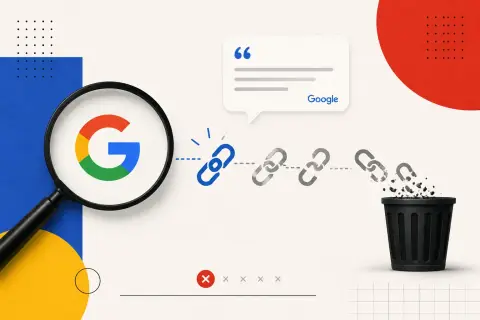
None of this means YouTube mentions are worthless, or that the correlation Ahrefs found isn't real. It means a correlation study run on brands that already cleared a domain-rating and search-volume floor can't tell you whether earning more YouTube mentions will move a smaller brand's AI visibility, and it definitely can't tell you to defund the channel that's still driving 190 times more traffic. Digital PR campaigns that earn a brand mention in a trusted publication frequently earn a backlink in the same placement. Treating mentions and links as a budget trade-off, one channel's gain requiring the other's loss, isn't a conclusion this data supports. It's a framing some of the companies selling AI-visibility services have an obvious interest in promoting.
If you're weighing where to put outreach effort next quarter, this study is a reasonable argument for adding YouTube and creator-mention tracking to whatever you're already measuring. It's not a reasonable argument for walking away from a link-building program that's still feeding the search channel doing the overwhelming majority of the referral work. Read the correlation for what it is, and read the budget advice built on top of it for what that is too.