Google's link spam policy names press releases, but the wording is narrower than most summaries claim. Here is what it covers and where release links count.
Agencies keep getting the same request from clients: put out a press release, get some backlinks. Distribution services still sell the idea, usually with a list of news-looking sites where the release will "go live" with a link back. Whether that's worth buying depends on a short passage in Google's policy, and most summaries of it round the wording up or down.
The exact wording
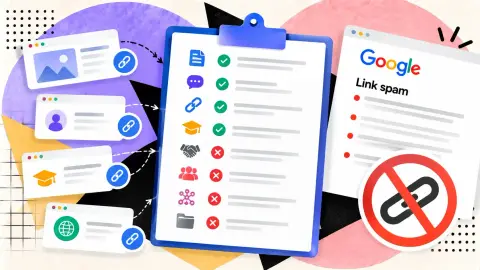
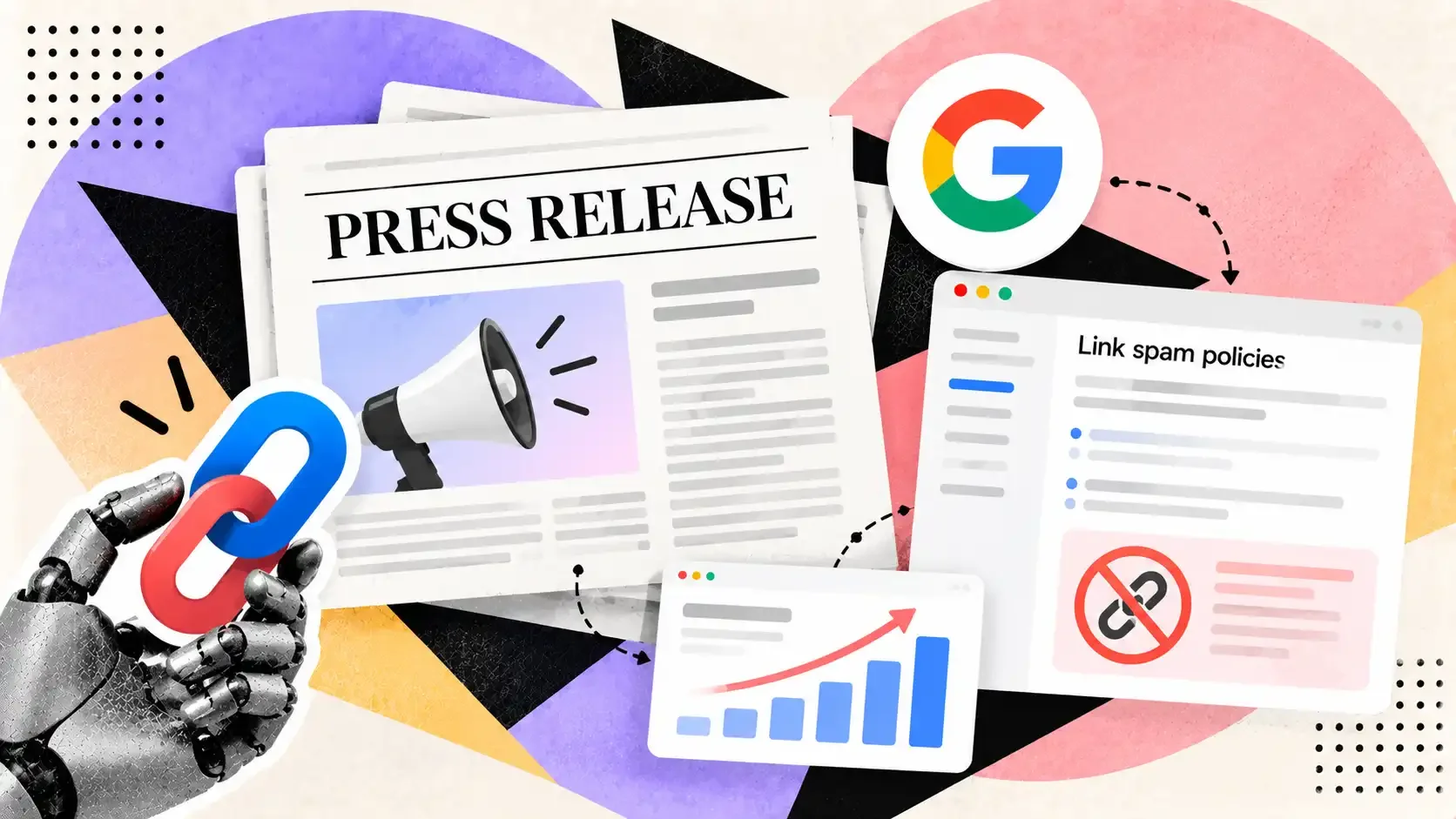
Google's spam policies, last updated August 28, 2026, define link spam as "the practice of creating links to or from a site primarily for the purpose of manipulating search rankings." The examples include this one: "Advertorials or native advertising where payment is received for articles that include links that pass ranking credit, or links with optimized anchor text in articles, guest posts, or press releases distributed on other sites."
Read it slowly, because the sentence has two parts joined by "or." One part covers paid articles with links that pass ranking credit. The other covers links with optimized anchor text in articles, guest posts or press releases distributed on other sites. Press releases are named only in the second part.
So the policy doesn't say press releases are banned, and it doesn't say every press release link is spam. It says that distributing a release on other sites with keyword-optimized anchor text is a link spam pattern, and that paying for content with links that pass credit is one too.
What the policy tells you to do instead
Google's page on qualifying outbound links says paid placements and advertisements should carry rel="sponsored", and that nofollow is still an acceptable way to flag them. It adds that links marked with these attributes "will generally not be followed." A paid distribution service that publishes your release on partner sites is, in Google's framing, a paid placement. If the service marks those links correctly, they aren't passing ranking credit, and they aren't counting toward your rankings either.
That gives you a practical test for any press release package. Open a sample of the live syndicated copies from the vendor's past clients and view source. If the link to the client has rel="nofollow" or rel="sponsored", it won't help rankings by Google's own description. If it doesn't, and the anchor text is a commercial keyword, the package is selling the exact pattern the policy names.
Where the confusion comes from
Vendors tend to say press release links are valuable because they appear on high-authority news sites. That may describe where the copy lands. It says nothing about whether the link passes credit, which is decided by the attributes on the link and by Google's systems, not by the domain it sits on. A high-authority domain hosting a paid, nofollowed wire page gives you a mention, not a ranking signal.
There is also a difference between distribution and pickup. If a journalist reads your release, writes their own story and links to you, that's an editorial link, and it isn't what the policy describes. The release is the outreach. The link is the result of someone choosing to cite you. That's how digital PR works, and we covered the mechanics in our guide to earning editorial links through digital PR.
What a press release can still do
None of this makes releases worthless. A good one gives a reporter a reason to contact you, puts a dated, citable statement on the record, and can produce brand mentions that matter for AI search even when no link is attached. Our look at backlinks versus brand mentions in AI search covers why a mention without a link isn't empty.
The mistake is budgeting a release as a link-building line item. Budget it as outreach, with the link as a possible but unguaranteed outcome.
How to buy one without breaking the policy
If you do use a distribution service, three habits keep you on the right side of the wording. Use your brand name or a plain URL as anchor text, not a commercial keyword. Ask the vendor in writing whether syndicated links carry sponsored or nofollow, and treat a vague answer as a no. And track what you can measure: referring domains gained that appear in an independent backlink tool, and traffic from the distribution pages, rather than the vendor's report of "placements."
If you've already run releases with keyword anchors on distribution networks, the policy language is a reason to review them. It isn't, by itself, evidence that Google has penalized anyone for doing so, and Google hasn't published a count of enforcement against releases specifically. For a site with a handful of old releases, the likelier outcome is that the links were discounted, not that the site was punished. A pattern of hundreds of keyword-anchor links across syndicated pages is a different situation, and it belongs in a link audit.