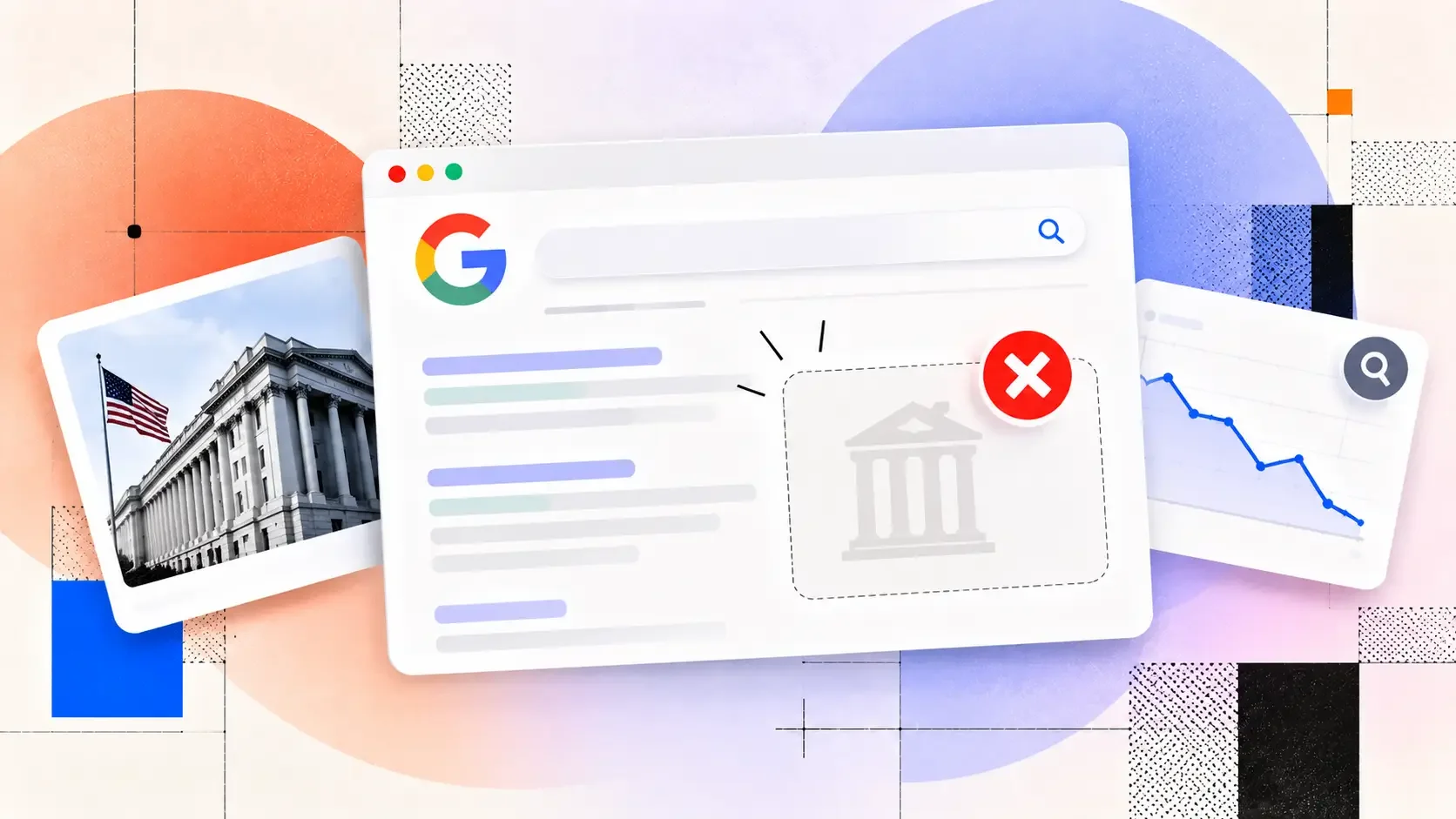
The IRS and other .gov sites lost Google visibility in late August 2026. The leading explanation is an admitted guess, not a confirmed diagnosis.
Sometime around August 18, 2026, PDFs from IRS.gov and New York State's tax pages started disappearing from Google search results, even for people who explicitly searched with "PDF" in the query or a filetype: operator, as Search Engine Roundtable's Barry Schwartz first documented on August 25, quoting a post from SEO consultant Lily Ray that the IRS website "is not accessible and it seems to have completely dropped out of Google search." Two days later, Schwartz published a dedicated piece on the IRS specifically, and here's the part worth sitting with: his own headline explanation for why is explicitly labeled a guess.
What's confirmed
Searching for the IRS website in Google currently shows a broken favicon and no description in the snippet, a pattern that typically means Google can't access the page to generate either one. Lily Ray posted a Sistrix chart on X showing the IRS falling out of rankings for keywords it held the top spot for a month earlier, including stimulus, identity theft protection, free tax filing, and tax brackets. She also reported being unable to load the IRS site herself, as a human, on desktop. Glenn Gabe corroborated the pattern independently and noted other government sites tanked in visibility around the same window. As of the morning of August 27, Schwartz reported things were not visibly improving.
What's a guess, in the reporter's own words
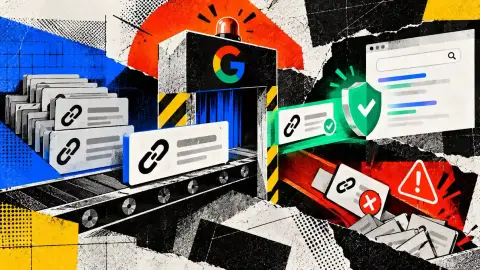
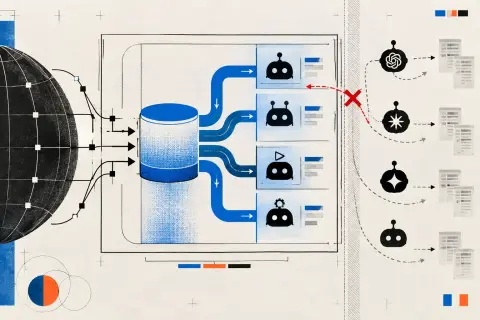
Schwartz's own framing, stated directly in his piece: "My gut feeling is that the federal government implemented some bot-blocking that was too aggressive and blocked Google, among others, resulting in Google not fully showing the IRS website." That's the theory this story is circulating under. It's also, by the reporter's own description, a gut feeling, not a diagnosis backed by a status page, a spokesperson statement, or a technical trace of what changed on the IRS side.
Why the other reporting on this doesn't fully agree
Glenn Gabe's own post hedges toward a different explanation: he noted the IRS and other government sites "tanked in visibility right around the spam update" and that the favicon loss specifically "could be on Google's" end. That matters because Google has already had one confirmed, unrelated bug in the same general window: a spike in broken favicons across unrelated sites, including LinkedIn, that Google's own Rajan Patel confirmed on August 21 was "an issue on our end," fixed by August 23. The IRS's favicon and snippet problems surfacing a few days after that fix was declared complete could be a fresh, separate Google-side issue rather than a symptom of the IRS's own bot-blocking. Separately, Lily Ray's report that she personally couldn't load the site as a human sits awkwardly with a theory specifically about blocking crawlers, since a crawler-targeted block wouldn't normally stop an ordinary browser visit too.
What this means if your backlinks point at a site like this
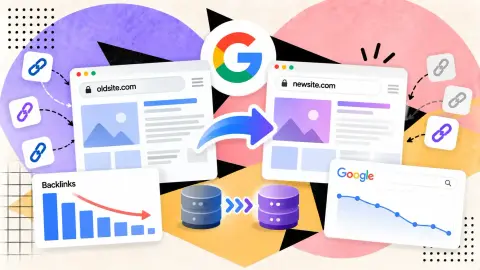
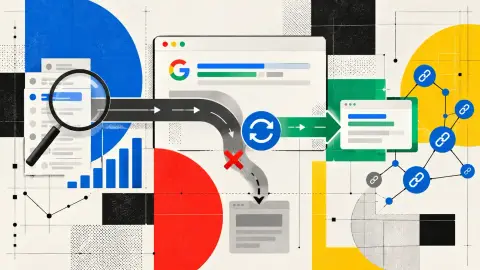
Whatever the actual cause turns out to be, the mechanism that matters for backlink-heavy sites is the same either way. A backlink's value depends on Google being able to reach, render, and index the page it points to. Google's own crawl-health framework, the same one that governs ordinary crawl budget allocation, treats server errors, timeouts, and blocked-access signals as reasons to downgrade a site's crawl treatment regardless of how many quality links point to it. A site that becomes uncrawlable, whether from its own misconfigured bot-blocking, a CDN rule catching more than intended, or a bug on Google's end, doesn't lose its backlinks. It loses the ability for those backlinks to do anything, because there's no indexed page on the other end for them to support. This also isn't a spam action: nothing here suggests a manual or algorithmic penalty, which is worth separating clearly from the ranking noise Google's own August spam update has already generated this month.
What to check if this happens to a site you depend on
Before assuming any specific cause, the fastest diagnostic is the one used throughout this story: search for the site by name in Google and look at whether the favicon and meta description render normally. If they're broken or missing, that's a real signal Google can't currently access the page, regardless of whether the reason is server-side blocking, a CDN misconfiguration, or a bug on Google's end. From there, Search Console's crawl stats and URL inspection tool will show whether Googlebot is getting blocked, timing out, or succeeding, which narrows the cause far faster than a guess.