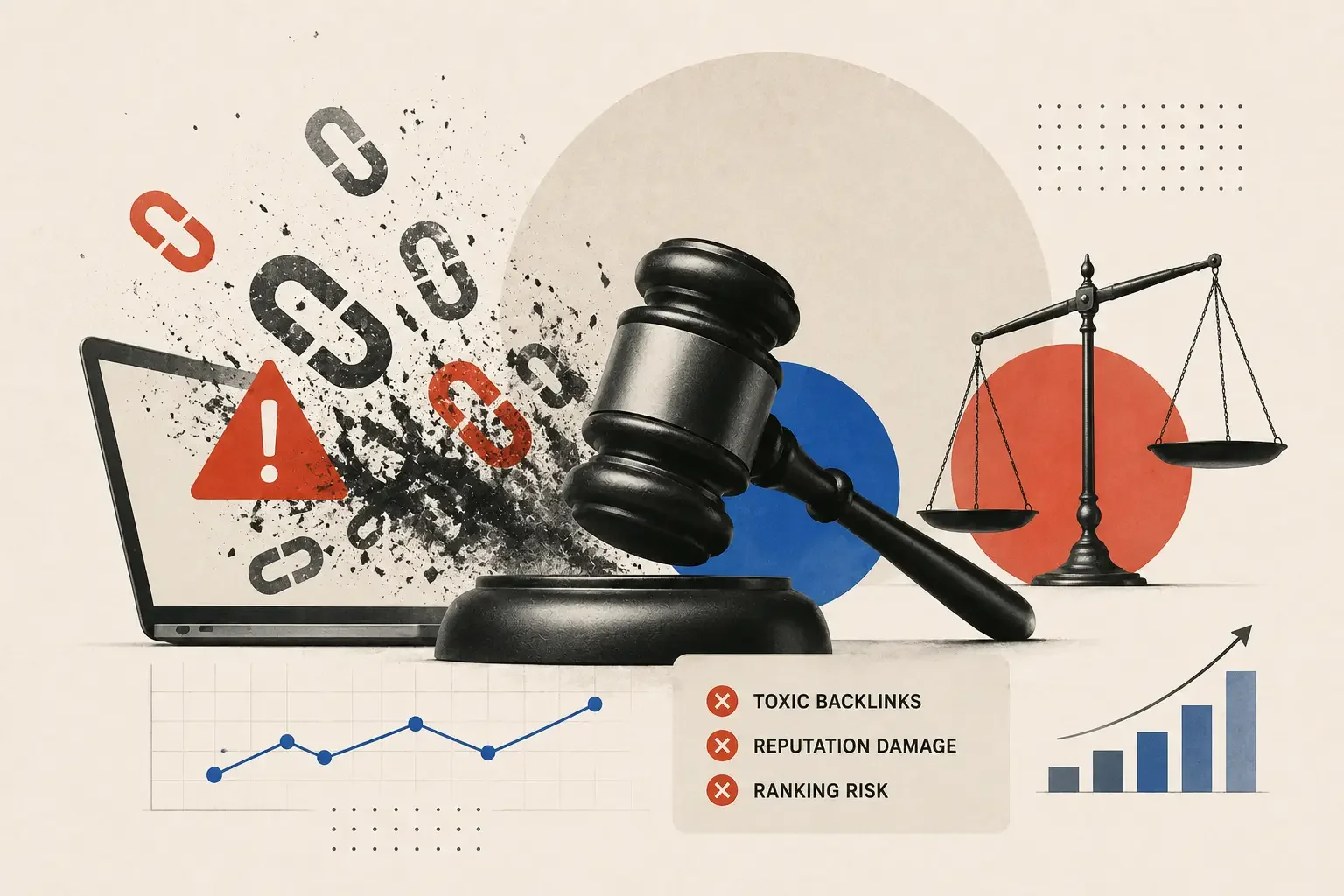
A judge let a toxic-backlink false advertising claim survive dismissal in Montway v. Nexus AT. That's not a liability finding. Here's what actually happened.
A federal judge just let a toxic-backlink lawsuit move forward, and the SEO world is already treating it like negative SEO finally has a legal remedy. It doesn't, not yet. What actually happened is narrower and more interesting than that: a judge decided a specific legal theory is plausible enough to test at trial. Whether the underlying allegations are even true hasn't been decided by anyone.
What the ruling actually says
The case is Montway LLC v. Nexus AT LLC, decided June 2, 2026 by Judge Matthew Kennelly in the Northern District of Illinois. Montway Auto Transport and a co-plaintiff, SGT Auto Transport, both automotive transport brokers, allege that competitor Nexus AT ran a months-long campaign of building toxic backlinks aimed at tanking their Google rankings. Nexus asked the court to throw the case out before trial. The judge dismissed only the plaintiffs' California unfair competition claim, on narrow grounds (they couldn't show a California-specific injury). Everything else, the federal false advertising claim under the Lanham Act, trademark infringement and tarnishment claims, and Illinois consumer protection claims, survives to the next stage.
Search Engine Land's coverage states this plainly: "The court didn't decide whether the allegations are true," and the ruling itself "doesn't decide whether the defendants are liable." A motion to dismiss only asks whether the complaint, if everything in it were true, describes a real legal claim. Nexus hasn't been found to have done anything. It asked to skip the trial and lost that specific argument.
What Montway and SGT actually allege
According to the complaint, Nexus created more than 2,350 backlinks between April and October 2025, pointing at Montway's and SGT's sites from spam-filled domains, using anchor text that had nothing to do with auto transport: "buy steroids online," "payday loan services," "illegal betting sites," "cocaine powder online," "unlicensed firearms," and similar phrases, according to Search Engine Land's reporting. The complaint also alleges a former Nexus manager told Montway executives that Nexus CEO George Arkin directed an SEO contractor to run the campaign, and that Montway sent a cease-and-desist letter in October 2025 after which the campaign allegedly intensified. None of this has been proven. It's what the plaintiffs claim, and claims are what a motion to dismiss tests for plausibility, not truth.
Why the false advertising claim survived
The legal hook is the anchor text itself. Judge Kennelly found it plausible that text reading "sgtautotransport.com" or similar, while actually linking somewhere else entirely, is literally false the same way a sign pointing the wrong direction is false: it promises one destination and delivers another. The harder question was whether a backlink campaign counts as "commercial advertising or promotion" at all, which is what the Lanham Act's false advertising provision actually covers. The Seventh Circuit's test only reaches "traditional commercial advertising or promotion methods." The court's answer was that toxic backlinks function like negative advertising aimed at a competitor, serving the same purpose: denigrating a rival to draw customers away.
That's a real stretch of the statute, and not everyone thinks it holds up.
The part being skipped over: this reasoning has real critics
Rebecca Tushnet, a Harvard Law professor who has written about false advertising law for two decades, read the same opinion and flagged the reasoning as shaky in more than one place. On the "commercial advertising" question, she points out the court's own logic actually described the plaintiffs' SEO spending as commercial advertising, not the defendant's backlink campaign, then treated that as if it answered the question of whether Nexus's conduct qualified. On the trademark infringement claim, she's blunter: the theory requires no allegation that any actual person ever hovered over these links to see where they led, meaning the "confusion" here is purely algorithmic. "That doesn't actually seem like trademark confusion to me," she writes, "even if it's disparaging false advertising." She calls the court's fame finding for tarnishment purposes "appallingly" thin, resting on boilerplate allegations of goodwill with no citation to the actual legal standard.
None of that means the case is weak. It means a respected expert in exactly this area of law thinks parts of the court's reasoning don't hold up on close inspection, even if the underlying instinct, that this fact pattern deserves its day in court, might still be right. That distinction matters if you're trying to gauge how solid a precedent this actually is, versus one judge's first pass at a genuinely novel fact pattern.
What this actually means if you're the target
Negative SEO victims have mostly had one real option: Google's disavow tool, which itself has become an increasingly unreliable signal for how much it actually helps (worth its own read if you've been burned by it before). This ruling doesn't hand you a second, proven option. It shows that a Lanham Act false advertising theory can survive a motion to dismiss when the fact pattern is specific enough: a large, documented volume of backlinks, genuinely false anchor text (not just spammy or irrelevant, but pointing somewhere different than it claims to), and ideally direct evidence of intent like the alleged insider tip in this case. A smaller or vaguer version of the same campaign might not clear the same bar.
If you're actually facing something like this, the practical takeaway is to document obsessively before you need to: export the anchor text, the referring domains, and the dates as the campaign happens, not after. That's the same evidence this complaint leaned on to survive dismissal, and it's exactly what a court would need to see again if this theory is going to hold up past a motion to dismiss and into an actual finding of fact. Whether it does is still an open question, one worth watching this case answer rather than assuming it already has.