Stop begging for links. Learn why traditional link building is obsolete and how to transition to scalable, organic link earning for high search rankings.
For over two decades, the SEO industry has treated backlinks like a commodity. You buy them, you trade them, you beg for them, or you scrape them from directories. This transactional approach is what we call "Link Building." It is tedious, highly manipulative, and increasingly ineffective in 2026.
There is a fundamental paradigm shift happening in search algorithms right now. Google is getting infinitely better at identifying inorganic, forced links. The algorithm no longer rewards the sheer volume of links you can forcefully construct. It rewards the links you naturally attract.
This is the transition from Link Building to Link Earning.
If your entire strategy relies on sending cold emails asking for link insertions or buying exact-match anchor text on random blogs, your site is on borrowed time. Here is exactly why the paradigm has shifted, what link earning actually looks like, and how you can restructure your entire SEO operation to thrive in this new ecosystem.
The Problem with Traditional Link Building
Traditional link building is inherently unnatural. Think about the mechanics. You run a massive Ahrefs export of your competitor's backlinks. You find a list of resource pages. You blast 5,000 templated emails begging webmasters to add your link to their page. Or worse, you pay a "vendor" $150 to publish a poorly written guest post just to get a dofollow link in the author bio.
This process leaves massive footprints.
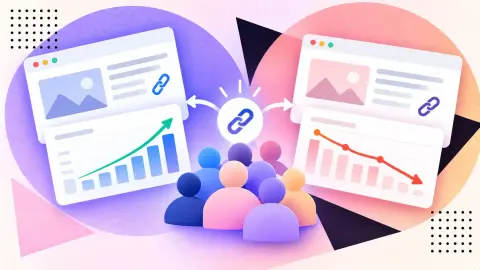
Search engines, powered by systems like SpamBrain, can detect these footprints instantly. They see the sudden influx of links from sites that exist solely to sell links. As we discussed in our guide on why the disavow tool is dead, Google simply neutralizes these low-quality links. They pass zero value.
Furthermore, traditional link building is incredibly unscalable. It relies entirely on manual labor and constant financial investment. The moment you stop sending outreach emails or paying vendors, your link growth drops to zero. You are running on a treadmill.
What is Link Earning?
Link earning is the process of creating digital assets, data, or experiences that are so inherently valuable, authoritative, or unique that other websites naturally want to reference them.
Instead of asking for a link, you give people a reason to cite you.
When a journalist at Forbes is writing an article about remote work trends in 2026, they need statistics. They search for "remote work statistics 2026." If your company has published an original, meticulously researched survey of 10,000 remote workers, that journalist will cite your data. They will link to your study as the source.
You did not email that journalist. You did not pay for that placement. You earned the link by providing immense value.
This is the Holy Grail of SEO. Earned links are infinitely more powerful than built links because they occur naturally within the exact topical context of your industry. They pass massive amounts of entity relevance.
The Economics of Link Earning
Skeptics often argue that link earning is too expensive. Creating a massive data study or an interactive tool costs significantly more upfront than buying a $100 guest post.
But you must look at the unit economics over time.
Let's say you spend $5,000 creating an incredible, original industry report. In the first month, you might earn zero links. But as that asset ranks for long-tail informational queries, journalists and bloggers discover it. Over the next year, that single asset might organically earn 150 high-authority backlinks from major publications.
The cost per link drops to $33. And these are DA 80+ editorial links that you literally could not buy if you tried.
Conversely, if you buy 150 guest posts at $100 each, you spend $15,000. You get 150 low-quality links that Google will likely neutralize within six months. The economics of traditional link building simply do not make sense anymore.
How to Transition Your Strategy Today
Transitioning from building to earning requires a complete mindset shift. You have to stop acting like an SEO and start acting like a digital publisher.
1. Create Proprietary Data Data is the currency of the modern web. Journalists need data to back up their claims. Run surveys using platforms like Pollfish or SurveyMonkey. Analyze your own internal customer data to reveal industry trends. Publish this data in beautiful, easily digestible reports.
2. Build Free Tools Calculators, templates, and generators are incredible link magnets. If you sell accounting software, build a free "2026 Tax Bracket Calculator." When people find it useful, they will link to it from their own blogs and forums.
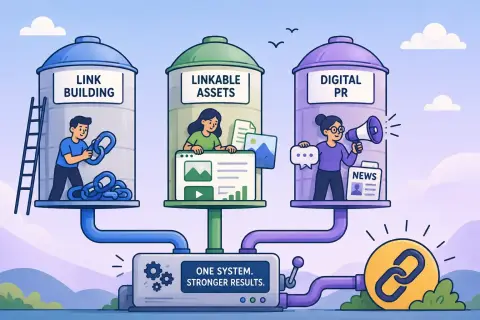
3. Invest heavily in Digital PR Digital PR is the ultimate accelerator for link earning. It involves taking your proprietary data or unique insights and actively pitching them to journalists at major publications. For a complete blueprint on this, read our comprehensive guide on Digital PR for SEO.
4. Stop Tracking Useless Metrics If you want your team to earn links, you must stop measuring their success based on outdated metrics. Stop obsessing over Domain Authority (DA). As we have proven, DA is dead. Instead, measure the topical relevance of the referring domains and the actual referral traffic those links generate.
And for the love of God, stop tracking your backlinks in massive spreadsheets. Use a centralized, automated system that tracks the health and existence of your earned links automatically.
The Bottom Line
Link building is a transaction. Link earning is an investment.
The websites that dominate search results in 2026 and beyond will not be the ones with the largest budget for guest posts. They will be the ones that consistently publish the most cite-able, authoritative assets in their respective industries.
Stop begging for links. Start giving the internet a reason to link to you.