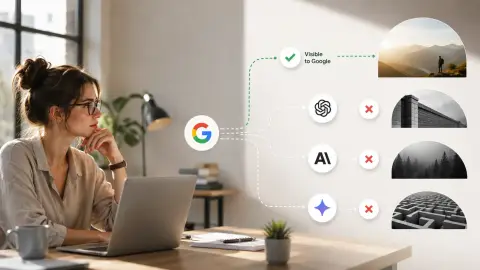
Google says 345,000+ people picked Preferred Sources, no fee or application involved. Here's how it works, and what John Mueller says it doesn't do.
There's no application form, no fee tier, and no agency that can sell it to you. Google's Preferred Sources feature works by getting an actual reader to click a button on your site, and that click is the entire mechanism. While this blog has already covered vendors selling fake "AI visibility" link packages and GEO agencies relabeling PBN placements as brand mentions, Google has spent the last year quietly building the real version of what those products pretend to be: a visibility signal that only exists because a specific person chose it.
What Preferred Sources does
Google launched Preferred Sources on August 12, 2025, starting in the U.S. and India, as a way for people to select favorite news sites and see more of their content inside the Top Stories feature. It expanded to all languages Google Search supports on April 30, 2026, and on May 27, 2026, Google extended it into AI Overviews and AI Mode, with the rollout starting that same day. A site a user has selected now gets a "preferred" label on links inside AI-generated responses, not just in Top Stories.
The mechanics are plain. A reader visits Google's source preferences settings, searches for a site, and adds it. From then on, that site's fresh content is more likely to surface for that specific reader, both in Top Stories and, now, in AI answers. Google's own numbers: more than 345,000 unique sources have been selected, up from roughly 90,000 when the feature went global, and people click through to a Preferred Source at twice the rate of other links. Worth flagging: Search Engine Journal noted that Google didn't publish how that 2x click-through figure was measured or whether it controls for the fact that a reader who already picked a source is predisposed to click it. Treat the number as directionally real, not independently audited.
Why this doesn't fit the usual playbook
Every other authority-adjacent signal on this blog eventually has a price attached to it: a backlink has a market rate, a directory listing has a submission fee, even a guest post has an editorial bar someone has to clear. Preferred Sources has none of that. Google's documentation is explicit that only domain-level and subdomain-level sites are eligible, a subdirectory can't be selected on its own, and beyond that, "any website that publishes fresh content is eligible." There's no review process, no minimum traffic, no manual approval. A site either gets picked by real people or it doesn't.
That also means it can't be reverse-engineered the way a ranking factor can. The only lever a publisher has is asking: Google's docs walk through three ways to prompt it, a JavaScript button that adds a one-click "add as preferred source" widget to a page, an advanced version for custom UI, and a plain deeplink (google.com/preferences/source?q=yoursite.com) that works in an email newsletter or social post with no code at all. All three end at the same place: a real person has to click.
It's not a backdoor around quality signals either
The obvious next question, raised directly by an SEO on Bluesky asking whether a followed site could show up in Top Stories even with low helpful-content scores or AI-generated text, got answered on the record by Google's John Mueller. His reply: "We document it as 'When a user selects your site as a preferred source, your content is more likely to appear for them during relevant news queries in "Top Stories".' I don't think it makes sense to show spam to users just because of that, but it does help a user to see their preferred sources more."
That's a narrower claim than "override the algorithm." Preferred Sources shifts which of your already-qualifying content surfaces more often to the specific people who picked you. It doesn't appear to be a way to launder a site past Google's quality and spam systems, and Mueller's answer, read next to the documentation he's quoting, reads as Google keeping those systems separate on purpose.
What this means if you're chasing AI visibility
If a vendor is currently pitching you a package to "get preferred source status" or "boost your AI Overview citations" for a fee, that pitch doesn't match how the mechanism works. There's no purchasable version of getting 345,000 individual people to trust a domain enough to click a button for it. The only real lever available to any site owner is the free one already documented above, plus the underlying work that makes a reader want to select a source in the first place: publishing content people keep coming back for and building enough of a relationship with an audience that they'd bother.
Alongside Preferred Sources, Google also expanded its "Highly Cited" label to flag articles that other stories frequently reference, and to show when a piece explicitly cites a Highly Cited source. It's a different mechanism, but it rewards the same kind of thing: being the place other people and other sites already point to, not a setting anyone can configure from the outside.
Where this differs from what's already on this blog
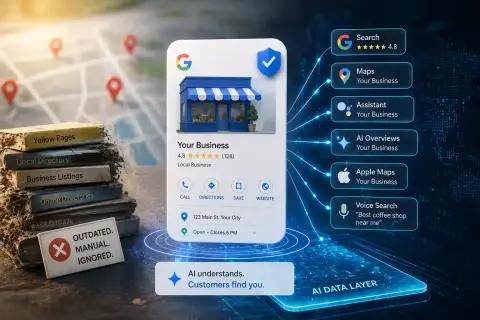
The AI-agent backlink sellers post and the GEO/PBN brand-mentions post both examined vendors selling something marketed as "AI visibility" that turned out to be a repackaged link scheme. This post looks at the other side: a real, Google-confirmed mechanism that produces actual AI-answer visibility, and the reason it's not being sold by anyone is that there's nothing to sell. A directory listing, by contrast, is visibility you can build directly and immediately without waiting on a reader to click anything, the more direct version of the same idea: placement earned rather than granted from outside.