Which directories to use: the few general ones search engines and AI tools rely on, the niche ones your customers use, and the low-quality ones to skip.
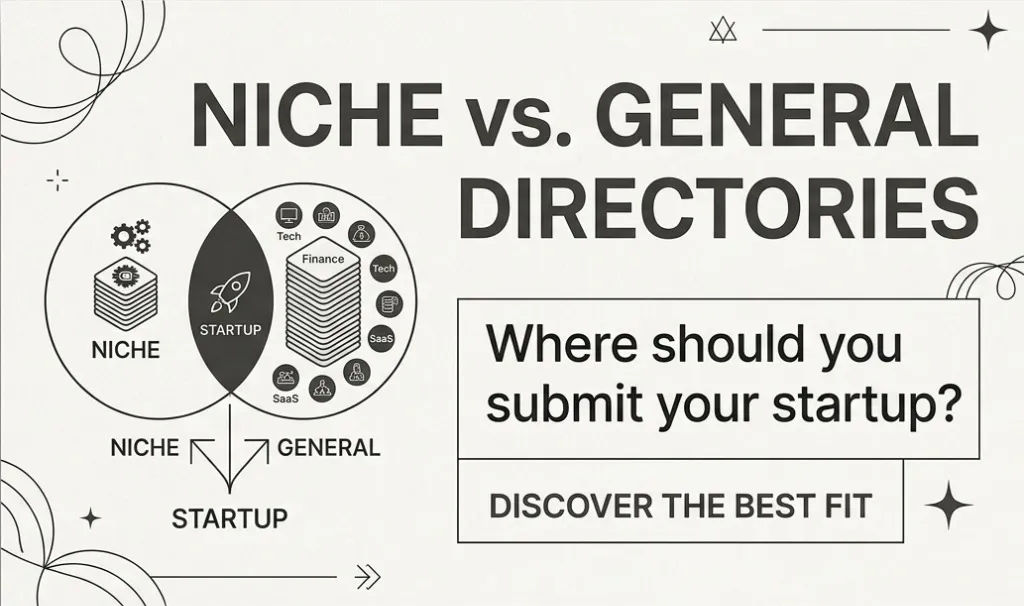
Use both, but not equally. A short list of major general directories, such as Google Business Profile, Yelp and the Better Business Bureau, is worth claiming because search engines and AI assistants read them. After that, BrightLocal's data points to niche directories for your industry ahead of more general ones. What you should skip is the long tail of low-quality directories, which Google's spam policies name as link spam. Here is what the data shows, how to tell the two kinds apart, and a simple order of work.
What counts as a niche or a general directory
A general directory lists businesses from any industry: Yelp, Yellow Pages, MapQuest and the like. A niche directory lists one industry or audience, such as Houzz for home projects, Zocdoc for doctors or Clutch for agencies. Local directories sit in between: a chamber of commerce lists every kind of business, but only in one place.
Google's policy draws its line by quality, not by type, so a well-run general directory can be worth more than a thin niche one.
What Google says about directory links
Google's spam policies list "Low-quality directory or bookmark site links" among their examples of link spam. The same list includes "Excessive link exchanges" and partner pages made only for cross-linking. So a directory that requires a link back before it lists you is close to a pattern Google names: requiring a link as part of an arrangement.
The policy does not say directories are bad. It targets low-quality ones, and links built "primarily for the purpose of manipulating search rankings." A listing that real customers use to find and compare businesses is a different thing from a page of links nobody reads.
What the data says about each kind
Directories take up real space in local search results. BrightLocal's Business Listings Visibility Study from October 2024 recorded 8,000 Google results for local searches. It found that business directories made up 31% of the top ten organic results overall, and 37% for informational searches such as "best coffee shop". Yelp was the most common directory. The study also found that industry-specific directories, such as Booksy, DoorDash, Gymbird and GreatVet, "were prominent across respective industry searches."
AI assistants lean on a few general platforms, then on industry sites. BrightLocal's study of local AI search sources is based on 60,970 checks run for its August 2026 report across Google AI Overviews, AI Mode and ChatGPT. Google Business Profile made up 28.5% of all citations. BrightLocal's advice from the data is to get listed on a number of generic directories first, and then on specific industry directories too. It also found that AI "turns to specialist sources depending on the type of business."
Practitioners rate niche directories highest. In BrightLocal's Expert Local Citation Survey of 22 local search experts, 64% chose niche and industry directories as their most valued source of structured citations. Industry relevance ranked as the most important factor when choosing citation sites. That survey dates from 2018. Treat it as expert opinion from that time, not a measurement.
For more on how AI tools use directory listings, our look at two studies on directory listings and AI recommendations goes through the numbers.
How to tell a useful directory from filler
Whatever the type, run the same checks before you submit. These checks, and the order of work below, are our suggestions built on the sources above, not Google's or BrightLocal's:
- Does it show up for real searches? Search your service and city, or your product category. If the directory's pages appear, people searching can find businesses through it.
- Is there a review step? Look for editorial review or business verification. A site that publishes any link instantly after payment is selling links, which Google's policy lists as link spam.
- Does it ask for a link back? A required reciprocal link is a link exchange.
- Who else is listed? If unrelated or spammy listings sit next to real businesses, the directory is probably not moderated.
- Is it still maintained? Check for recent listings and working pages.
Our guide to bulk directory submission packages shows how to test a list before you pay for one.
A simple order of work
- Claim the core general profiles. Google Business Profile comes first; BrightLocal found Google's AI Overviews and AI Mode used it for virtually every location it checked. Add the general platforms that show up for your searches, such as Yelp, Facebook or the BBB.
- Find the directories your customers use. Search the way a buyer would and list every industry directory, marketplace and review site that appears. These are your niche targets.
- Keep your business details identical everywhere. Use the same name, address, phone number and website on every listing; BrightLocal's experts said phone number, city, ZIP and URL need to be exact matches.
- Stop at the useful ones. Once you have the core profiles and the directories that appear for your searches, more general listings are unlikely to add much. BrightLocal's experts ranked industry relevance first, which points to relevance over volume.
SerpCrest's Backlink Directory lists sites to get links from by type, including directories, with each one reviewed by hand before it is listed and checked again every week. To keep track of the listings you get, the Backlink Manager records each submission and its status and, with an account, checks whether a saved link is still there.
The short answer
Claim the handful of general directories that search engines and AI tools rely on, then spend most of your effort on niche directories your customers use. Skip any directory that exists only to sell links, whatever its type.